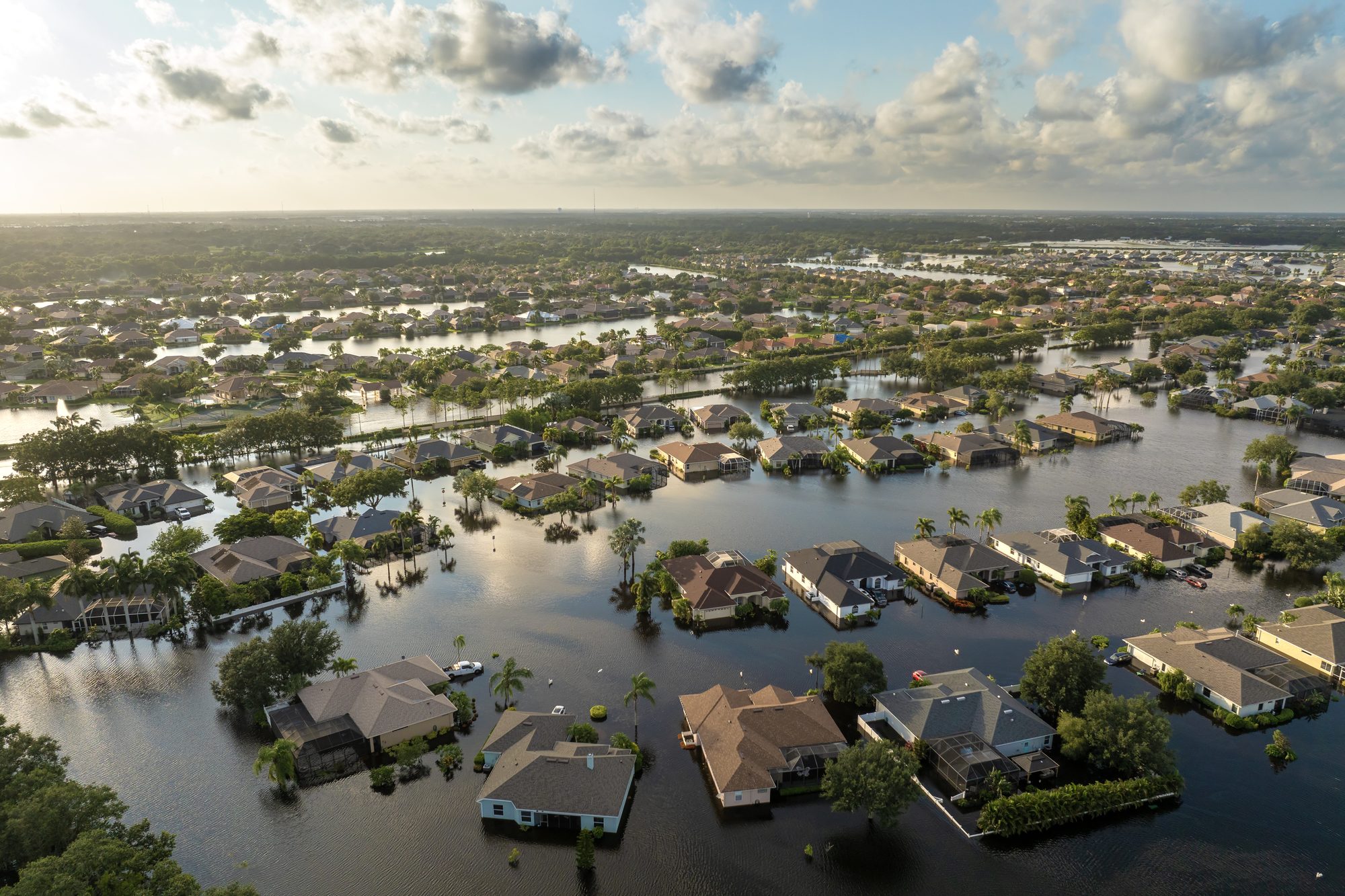
The U.S. Army Corps of Engineers wants to spend $4.5 billion to physically raise more than 3,200 homes and buildings across Miami-Dade County above future flood levels.
The plan, first reported by the Miami Herald and released Thursday, Aug. 27, targets 2,800 single-family homes and 430 smaller multifamily buildings for elevation, plus 275 properties for dry floodproofing. The federal government would cover 65% of the cost. Miami-Dade County would pay roughly $1.3 billion.
Aventura, Sunny Isles Beach and Golden Beach fall within the countywide study area. FEMA designates most of Aventura as a Special Flood Hazard Area, and the city's own flood page describes it as vulnerable to both stormwater runoff and coastal storm surges. The Corps has not published a property-by-property breakdown for northern Miami-Dade communities.
Without action, the Corps estimates Miami-Dade faces more than $54 billion in potential economic damage from homes destroyed by floodwaters, halted businesses and falling property values.
The effort is part of the Miami-Dade Back Bay Coastal Storm Risk Management Study, which began after Hurricane Irma struck in 2017. The Corps initially proposed miles of concrete walls up to 13 feet tall along the coast. Residents rejected the idea, according to the Herald's account. Miami's Downtown Development Authority paid a consultant to mock up images of the walls covered in graffiti and trash. A commissioner called the concept "the Berlin Wall."
The walls never went up.
After years of debate, the Corps split the Phase 2 study into two parts. The first part, released in August 2026, covers only home elevation and floodproofing of critical buildings such as fire stations and wastewater treatment plants. A more controversial coastal storm-surge barrier remains shelved.
"We know the costs can be high and there may be other things involved. But we're going to do everything we can to make it viable for folks," Christian Kamrath, Miami-Dade's resilience program manager, said Aug. 27.
Kamrath's comment addressed a key catch: the Corps will only accept homes that already meet the latest building code. Properties with outdated wiring or unpermitted additions must be brought into compliance at the owner's expense. The county is looking into funding programs to help, and has consulted Harris County, Texas, which elevated thousands of homes after Hurricane Harvey, and the state-funded Elevate Florida program.
On the fastest timeline, construction could begin in 2032. Completing all 3,200 properties would take at least 16 years. Congress would need to fund the design phase in 2028.
The Corps found more than 3,000 properties at "high risk" of destructive flooding in the coming decades. Expanding to medium-risk properties pushed the count past 6,000 and the cost above $6 billion. The Corps chose to focus on the most vulnerable.
The $4.5 billion estimate assumes every targeted property owner agrees to participate. The project would cover elevation costs but not temporary housing during construction, which can take several months per home. Some properties may need to rise only a few feet; the maximum elevation in the plan is 12 feet.
Three public meetings are scheduled for residents to review the draft plan and comment:
- Tuesday, Sept. 1 — 6–7:30 p.m., William F. Dickinson Community Center, 1601 N. Krome Ave., Homestead
- Wednesday, Sept. 2 — 6–7:30 p.m., Overtown Performing Arts Center, 1074 NW Third Ave., Miami
- Wednesday, Sept. 9 — 6–7:30 p.m., virtual webinar
Residents can also submit comments by email to [email protected].




.jpg)