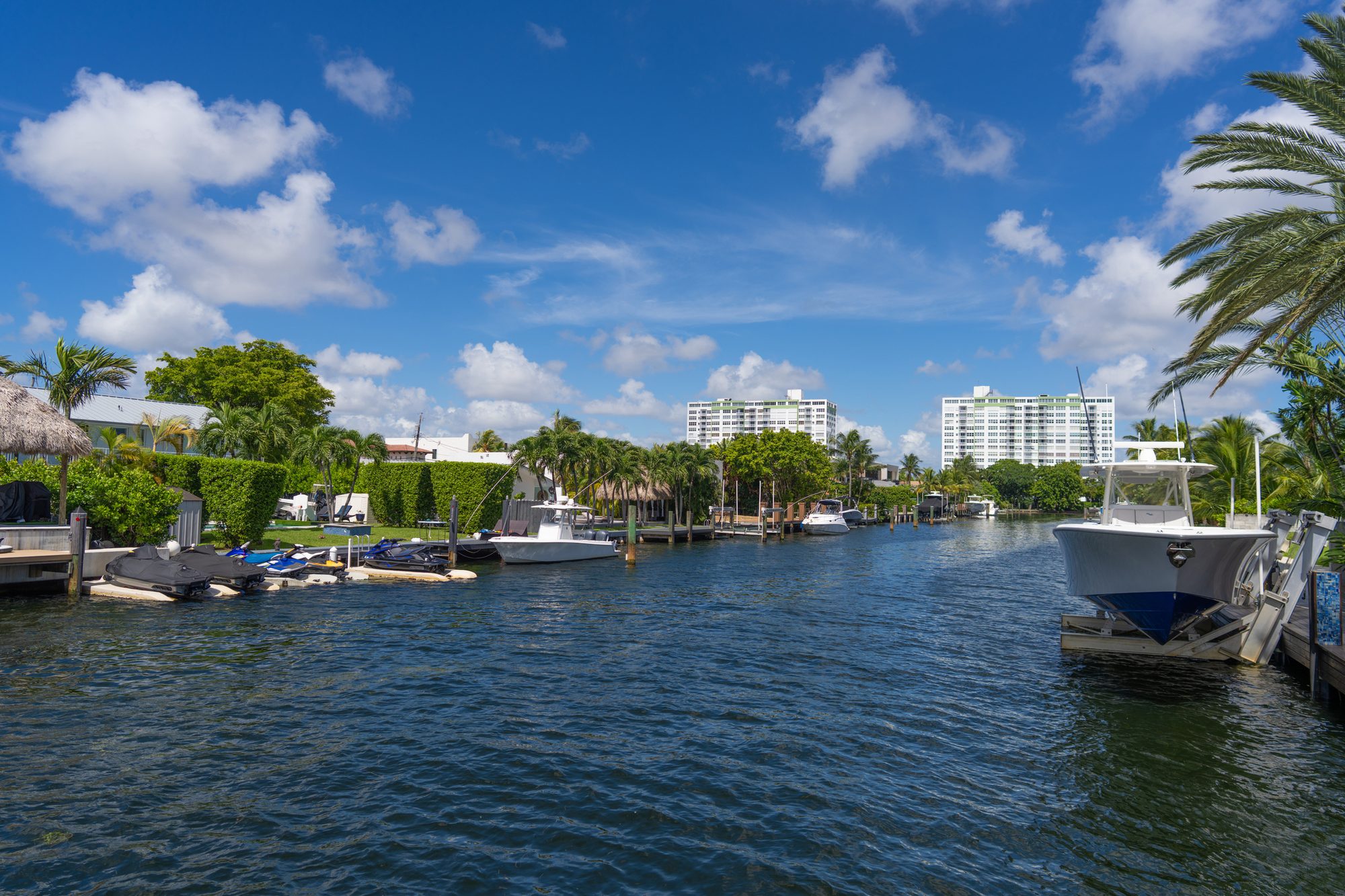
The South Florida Water Management District plans to spend up to $280 million to replace a 73-year-old flood control structure that drains stormwater from Aventura and multiple surrounding communities.
The project targets the S-29 Coastal Structure in the C-9 Basin, a 100-square-mile drainage area spanning northeastern Miami-Dade and southern Broward counties that serves more than 540,000 residents. Aventura, North Miami Beach, Miami Gardens, Miramar and Pembroke Pines are among the communities inside the basin.
Aging structure losing capacity as seas rise
The S-29 structure, built in 1953 near Biscayne Boulevard and N.W. 163rd Street in North Miami Beach, moves floodwater through the Snake Creek Canal to Biscayne Bay. Rising seas have slashed its capacity from 8,000 cubic feet per second at 1963 sea levels to about 5,000 cfs at current levels, according to SFWMD project documents. Under medium sea level rise projections, capacity would drop to 1,000 cfs. Under high projections, it would reach 0 cfs.
The lost capacity already shows up on local streets. Aventura police closed N.E. 191st Street from Biscayne Boulevard to 29th Avenue on Sept. 5, 2025, because of flooding. On March 30, 2025, officers handled multiple flooded roads across the city after heavy rains.
The Federal Emergency Management Agency, or FEMA, has designated most of Aventura a Special Flood Hazard Area, according to the city's flooding information page.
Replacement plan adds pump station, protects drinking water supply
The district's proposal calls for a full replacement of the S-29 structure with a corrosion-resistant spillway and elevated gates, plus a new 2,500 cfs forward pump station so floodwater can be pushed out even when tides are high. The project also includes storage improvements at Pickwick Lake in North Miami Beach, upgrades to 4.5 miles of secondary canals in partnership with Miami-Dade County, and four new sluice gates through the South Broward Drainage District.
The district said in project documents that the structure can no longer move water out fast enough under current conditions, especially during high tides. Water backs up within the basin and floods surrounding communities, with impacts stretching west toward the Country Club of Miami and Interstate 75.
The project would also protect the Biscayne Aquifer, the region's sole-source drinking water supply, from saltwater intrusion. Upgrades to East Greynolds Park, including a new pavilion, fishing pier, kayak launch and expanded ADA-accessible parking, are part of the plan as well.
Cost climbs to $280 million as district seeks federal funds
A May 2026 presentation to the South Florida Regional Planning Council put the latest cost estimate at $280 million, up from an earlier $250 million figure. The district has secured about $26.7 million from the Florida Department of Environmental Protection's Resilient Florida program and $1.85 million from a FEMA hazard mitigation grant for the design phase. Up to $10.6 million more could come from the 2026-27 Statewide Resiliency Plan, and roughly $50 million is being sought through FEMA's Building Resilient Infrastructure and Communities program.
The district estimates the project would save $65 million a year in avoided property damage, $11.5 million in reduced road damage and $15 million in protection of 750 infrastructure assets.
Federal review pending; no construction date set
SFWMD Executive Director Drew Bartlett sent a feasibility report for the broader Broward Basins flood resiliency study to the U.S. Army's assistant secretary for civil works on April 29, seeking authorization under the Water Resources Development Act of 2026. The C-9 project's design phase is complete, and the project is included in the state's 2026-27 resiliency plan. The district has not announced a construction start date or a public meeting specific to the C-9 Basin.
Residents can contact SFWMD Division Director Carolina Maran at [email protected] or 561-682-6868 for project updates.





.jpg)